Rotoscope animation
Rotoscope animation


Disney
Disney adopted the technique after the exclusivity patent endded in 1934, just in time for their first feature length film 'Snow White and the Seven Dwarves' in 1937. The animators at first didn't like the technique, calling it a "crutch". But, over toime, they could agree that having live-action reference was really helpful and useful.
 Beatles
The Beatles 'Yellow Submarine' in 1968 used rotoscoping for the 'Lucy in the Sky with Diamonds' segment. Canadian Director and animator George Dunning supervised the 200 plus animators over the course of 11 months. George used live-action footage of musicals and Fred Astaire and Ginger Rogers dancing 'Cheek to Cheek' for the sequence as well.
Gerald Potterton
Gerald the Canadian directed 'Heavy Metal' in 1981. Heavy metal use lots of rotoscoping.
 Ralph Bakshi
Ralph is the known director for 'Fritz the Cat' (1972), 'Wizards' (1977), 'The Lord of the Rings' (1978), and 'CoolWorld' (1992). The overall trend for these films are independent and adult-oriented animated films. Fritz the Cat was the first animated film to receive an X-rating. Also, he did writing and directing 6 out of his 10 animated feature-length films. CoolWorld seems to be inspired of 'Who Framed Roger Rabbit?' because this film has both live action and animated people interacting with each other.
Richard Linklater

Bob Sabiston
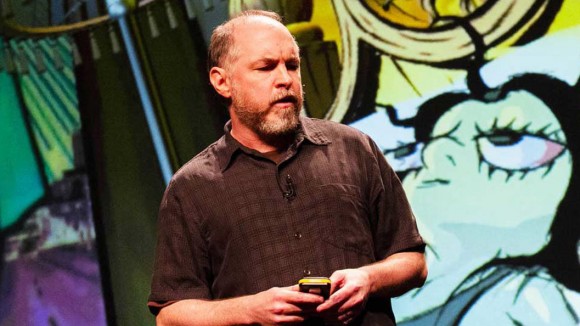 Bob is an animator director. When asked about Rotoscoping, Bob said "It’s not
really pure animation. But I've done pure animation, and it just never excited
me very much. I like being able to take someone's real expression and
magnify it, twist it, and amplify it. I realize that it's kind of a cheat, but
to me, that just means you've got to use it to go further, to do more than you
could even think of doing in regular animation. And I don't really care
what it's called as long as it's something that looks cool or new.". Used "interpolated rotoscoping" to ceate Rotoshop computer program. One rotoscoper could now do the work of eight animators.
Bob is an animator director. When asked about Rotoscoping, Bob said "It’s not
really pure animation. But I've done pure animation, and it just never excited
me very much. I like being able to take someone's real expression and
magnify it, twist it, and amplify it. I realize that it's kind of a cheat, but
to me, that just means you've got to use it to go further, to do more than you
could even think of doing in regular animation. And I don't really care
what it's called as long as it's something that looks cool or new.". Used "interpolated rotoscoping" to ceate Rotoshop computer program. One rotoscoper could now do the work of eight animators. 
Comments
Post a Comment