New German Cinema
New German Cinema
New German Cinema was launched in
1962 when a group of young film makers declared a new agenda for German Film in
a film festival document called the Oberhausen Manifesto
Films in Germany were in decline
and were of low quality and content
Lead by three directors –
Werner Herzog, Rainer Michael Fassbinder and Wim Wenders, German cinema began
to reflect contemporary issues
Inspired by French New Wave
Mixed art and politics, confronted
contemporary issues, criticized bourgeois institutions and themes of alienated
youth, marginalized groups, the limits of liberal democracy, and journalistic
integrity
Wim Wenders (1945)
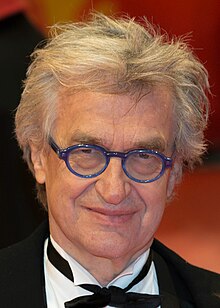 Wender’s
films are known for lush visual imagery (largely thanks to frequent
collaborator Cinematographer Robby Müller), travel,
experimentation, and masterful
storytelling,
Wender’s
films are known for lush visual imagery (largely thanks to frequent
collaborator Cinematographer Robby Müller), travel,
experimentation, and masterful
storytelling,
One of the biggest names to emerge as
part of the New German Cinema
Studied film at Munich Film Academy
while working as a film critic
After directing eight short films
for the academy, made his first feature film the thriller Die
Angst des Tormanns
beim
Elfmeter (1971; The
Goalie’s Anxiety at the Penalty Kick)
In 1978, Wenders went to Hollywood to
direct Hammett
Received Best Director Award at
Cannes in 1987 for Der Himmel über Berlin (“Heaven
over Berlin”; Eng. title Wings of Desire), in
which angels roam modern-day Berlin. inema movement of the 1970s
Other notable films include Paris,
Texas (1984), Until
the End of the World (1991), Faraway,
So Close
(1993), and Buena Vista Social Club (1999,
Documentary)
Werner Herzog (1942)

Known for capturing men and women
at psychological extremes (sometimes by employing controversial techniques to
elicit these performances), Klaus Kinski, small budgets, writing and producing
his own films, and setting his films in distinct and unfamiliar landscapes
Notable films include: Aguirre,
the Wrath of God (1972), Fitzcarraldo
(1982), My
Best Fiend (1999,
documentary on his relationship with Klaus Kinski), and Cave
of Forgotten Dreams (2010,
documentary)
He also acts and has lent his vocal
talents to Penguins of Madagascar
(2014) and Rick and Morty (2015,
“Shrimply
Pibbles”)
Studied history, literature, and
music in Munich and the University of Pittsburgh
First feature film was Lebenszeichen (1967; Signs
of Life)
Aguirre, the Wrath of God
(1972) follows a band of conquistadors into the jungles of South America and
marks one of his first collaborations with Klaus Kinski
It is said Herzog held a gun on
Kinski to force him to continue acting, although Kinski, in his autobiography,
denies this, adding darkly that he had the only gun.

Comments
Post a Comment